When I signed up for the RIAS program, I had no idea what I was getting into. I found information through RTDNF only by chance, and I was intrigued by the opportunity to travel to Germany. Previous trips had only heightened my affinity for the country. I knew there would be 11 other journalist colleagues, with impressive career histories.
What I did not expect was the efficiency and preparedness of both RTDNF and RIAS. Every detail was planned out, and hours had clearly been spent painstakingly finalizing the program. Listed on the itinerary were meetings with both American and German experts with whom I will never again have the opportunity to converse: a director with the German security academy, the U.S. Ambassador, radio and television CEOs and anchors, to name only a few. Our meetings were insightful and thought provoking, with a deep insight into the turbulent relationship with the U.S. and Germany.
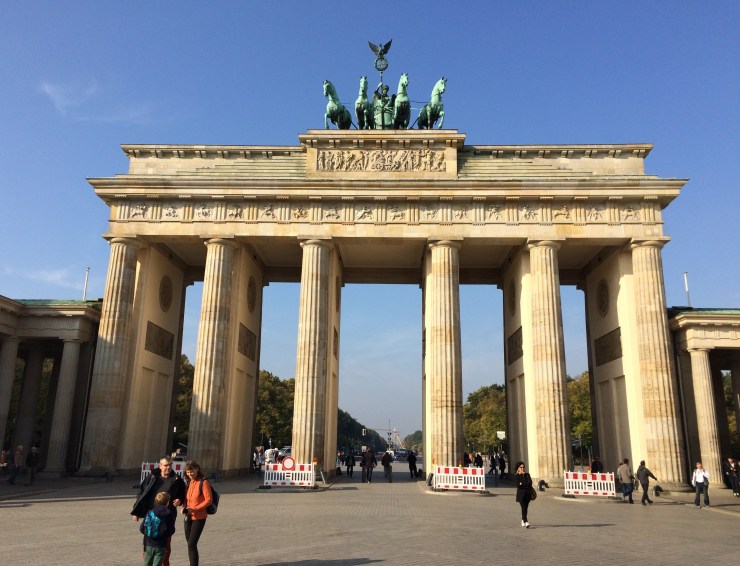
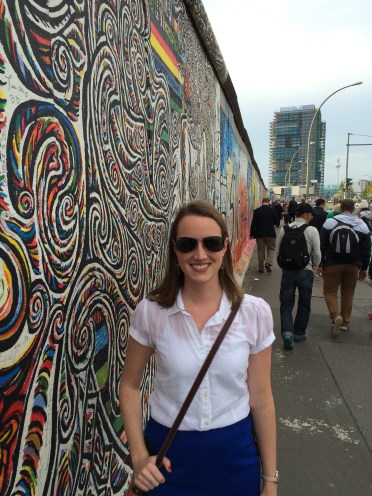
I also did not expect the seemingly great reluctance of Berliners to put the past in its place and fully embrace the city as a single entity. My fellowship was just before the 25th anniversary of the fall of the Berlin Wall, so people were particularly reflective about the events of the last few decades. My German host, a former RIAS participant, admitted it took international traveling for him to realize the rest of the world did not stigmatize Berlin, or indeed Germany, because of its rocky past. It pained me to see such a strong country and people a bit ashamed to be openly proud of their heritage, their place today as a world leader, even their flag. Thousands of people from all over the world are flocking to Berlin to become part of its vibrancy, and for all the opportunities the city offers. Berliners need to seize this chance to prove — to themselves — what an amazing place they come from.
The RIAS program did a wonderful job of mixing in meetings with visits to important and historical sites throughout the trip. The trip to the German parliament building, the Reichstag, was an incredible experience. Architecturally, it was so interesting to see the older outer shell juxtaposed with a modern interior. The woman who lead us through the building explained in so much detail both the building and the history and function of parliament. I was able to learn a great deal about the inner workings of the government system in Germany, and compare those differences to the U.S. congress.
One of the biggest variances is a multi-party system. This system helps shape the attitudes and functions of much of the country, and it helps many voices have a say in the government. I also think it allows the people to place more trust in their elected officials and have a less invested role in the decisions. I see a big difference in U.S. politics, which is by nature polarized and more controversial. The typical German, in my opinion, votes to elect their party, and then puts faith in the party to select the right lawmakers and leaders to represent their interests.
The trip to Potsdam was a big eye-opener for me. I had no idea the deep history in the town. Our first stop, to the Wannsee Villa, was very much a connector to the callousness of Hitler, Himmler, and their men. The exhibits about the “final solution to the Jewish Question,” as well as firsthand accounts from Jewish families, clarified the chilling straightforwardness with which the Nazis planned to rid the world of all Jews and “lesser” human beings. One of the exhibits that hit home the most for me was a piece of propaganda that just happened to catch my eye. It showed what was considered an acceptable family (I believe German or possibly Polish). Although the sketches were black and white, it was very clear the family was white, fair skinned, with blonde wavy hair and light eyes. Below this depiction was a drawing of a Jewish family. Every single person drawn in this family was rough-looking, disfigured and misshapen. This, I think, explained quite succinctly the mentality of the Nazi party and purpose. They considered Jews, and other unacceptable peoples, as subhuman and with undeniable hereditary problems.
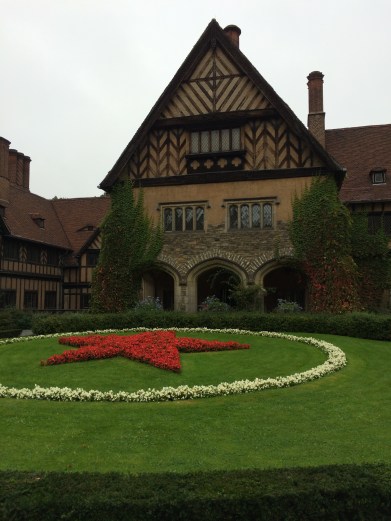
The Cecilienhof Palace next was as if taking a step forward through European history — from the Wannsee Conference to the Potsdam Conference, where leaders from the U.S., U.K., and Soviet Union gathered to lay out the future of Europe post World War II. Walking on the same floor, past the same books and desks and conference tables where Churchill, Truman, and Stalin debated was surreal. Each country had their own section of the palace and their own entrance into the buildings, because of the high tensions between everyone at the time. Leipzig was another city with incredible history I was not aware of. The Monday Demonstrations, which began with just a few people and swelled to hundreds of thousands, actually helped bring down the Berlin Wall. The opportunity to retrace these steps of thousands of peaceful protesters was an experience I will not soon forget.
Our visit to Cologne was cut short because of a train strike, which actually afforded the group an experience we would not have had otherwise. Our planned afternoon meeting with two reporters from state-owned TV station ARD was cancelled. Instead, the reporters met us the night before for dinner. A more casual environment really allowed everyone to ask quite varied questions about their positions, and the opportunities they had moving around the country working in various cities and bureaus for ARD. At the end of the night, the reporters took the group on a private evening tour of the Cologne station, and we were even given the opportunity to go on the rooftop to see the Cologne cathedral, a breathtaking sight. It became a landmark for pilots during World War II and because it was so easy to spot, managed to avoid any major damage from bombing. Much of the rest of Cologne was destroyed.
Before this fellowship with RIAS, I thought I knew a decent amount about the history of Germany and the culture of Germans. I learned so much more about both, and came back to the U.S. with a fresh take on life for people in Germany, particularly in these cities with such controversial histories. I was able to see inside the workings of the media there, which is almost polar opposite to journalism in the U.S. Here, most radio and TV stations are private, and the public stations are not as popular or mainstream. In Germany, public stations are funneled billions of dollars a year from the government and are extremely popular. I also learned a great deal from the other American fellows along on the program with me. Our careers and the paths to where we are today have all been so varied, each fellow had stories and insights from which to learn. The RIAS fellowship was an amazing experience both personally and professionally; I have now made it a point to spread the word about the program to other journalists in hope they too will have such a deep and valuable experience.
(Original blog post found under Fall 2014 participant reports here.)
 Miranda D. Reed